





Mini split maintenance comes down to three layers: filters you wash monthly, a seasonal check you do twice a year, and a professional deep clean every one to two years. That schedule, followed consistently, is what separates systems that quietly run for 15–20 years from systems that lose airflow, grow musty, and burn out compressors early. This guide covers each layer — what you can safely do yourself, what needs a technician, and the warning signs that mean the schedule doesn't matter anymore because the unit needs attention now.
Key takeaways
- Filters are homeowner territory; the blower wheel, coil, drain line, and refrigerant circuit are not.
- Yes, mini splits need to be cleaned — the filter catches most dust, and what gets past it lands on a wet coil, which is exactly where mold grows.
- The three loudest warning signs: weaker airflow than last season, a musty smell at startup, and water dripping from the indoor unit.
- Skipping maintenance costs money twice — higher electric bills now, and a shortened compressor life later.
The complete mini split maintenance checklist
Every task on a mini split maintenance schedule falls into one of three tiers, and the tier determines who does it. Here is the full schedule at a glance.
| How often | Task | Who does it |
|---|---|---|
| Monthly (heavy use) | Remove and wash filters in lukewarm water; dry fully before reinstalling | You |
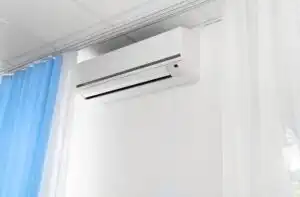
| Monthly | Wipe the indoor cabinet and louvers; confirm nothing blocks airflow | You |
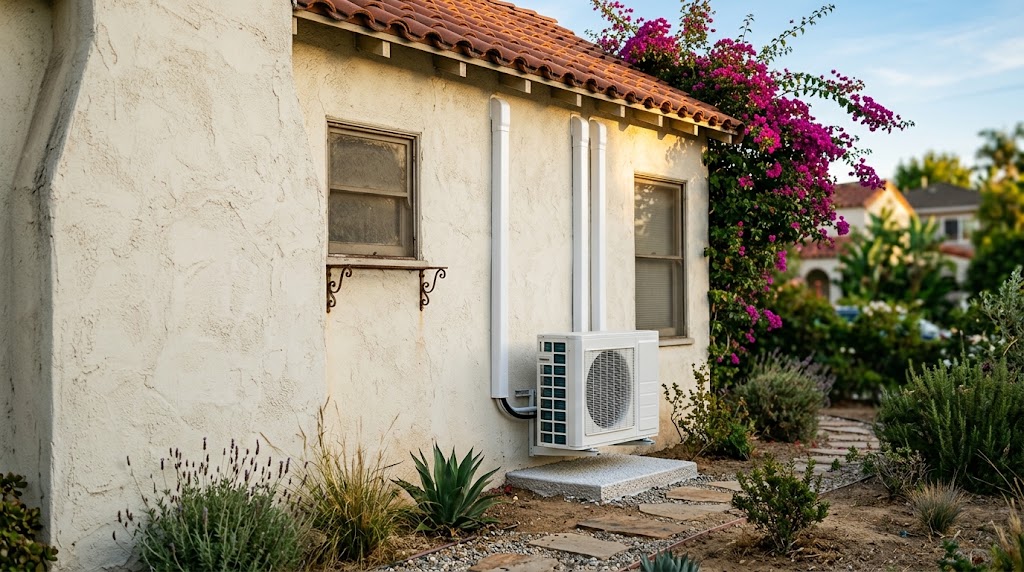
| Twice a year | Clear leaves and debris from around the outdoor unit; keep 12″+ clearance | You |
| Twice a year | Gently rinse the outdoor coil with a garden hose (system off) | You |
| Every 1–2 years | Deep clean: blower wheel, evaporator coil, condensate drain flush, drain pump test | Technician |
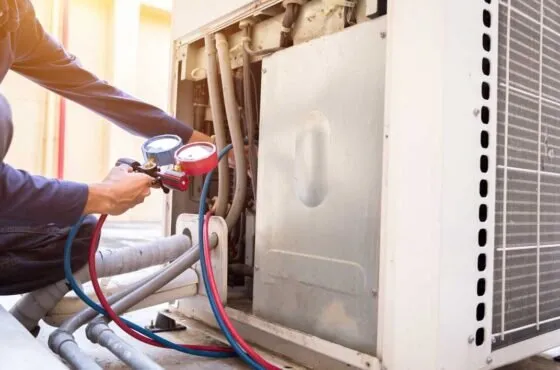
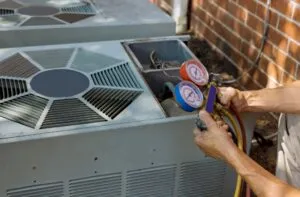
| Every 1–2 years | Refrigerant charge check, temperature split measurement, electrical inspection | Technician |
Do mini splits need to be cleaned?
Yes — and more than most owners assume, because the design that makes mini splits efficient also makes them collect grime in a hidden spot. The indoor unit constantly pulls room air across a cold, damp evaporator coil; dust that slips past the filter sticks to that wet surface and to the blower wheel behind it, and moisture plus dust is a growth medium for mold. That buildup is invisible from outside the unit. The first symptom is usually smell — a musty odor for the first minute after startup — followed by visibly weaker airflow as the blower wheel's fins cake over. Washing the filter doesn't touch either surface; reaching them requires opening the unit, which is the core of a professional deep clean.
What you can safely do yourself
The homeowner tier is genuinely easy and genuinely matters. Open the front panel, slide out the mesh filters, wash them in lukewarm water (no harsh detergents), let them dry completely, and reinstall — ten minutes a month during cooling season. Outside, keep a foot of clear space around the condenser and rinse its coil gently twice a year with the system off. Two hard limits: never bend or scrub the coil fins, which crush easily and restrict airflow permanently, and never open the refrigerant circuit — handling refrigerant requires EPA Section 608 certification, and DIY work on it typically voids the manufacturer warranty.
What requires a technician
The professional tier exists because the critical components require disassembly, instruments, or certification. A technician removes and cleans the blower wheel, treats the evaporator coil with coil-safe cleaner, flushes the condensate drain line and tests the lift pump (the top cause of indoor water drips), measures the refrigerant charge and temperature split to catch slow line-set leaks, and inspects electrical connections and the outdoor coil. On inverter-driven systems, a slightly low charge doesn't cause an obvious failure — the compressor just runs harder and hotter to compensate, which is why an undetected leak quietly shortens the life of the single most expensive part in the system.
How long do mini splits last?
A well-maintained ductless mini split typically lasts 15 to 20 years, meaningfully longer than the 10–15 commonly cited for central air conditioners — partly because the inverter compressor modulates instead of hard-cycling. Maintenance is the variable you control: clean coils and correct refrigerant charge keep compressor workload at design levels, while a neglected system does the same cooling job under permanent extra load. Coastal homes are the exception to every average, since salt air attacks outdoor coils; that's a real factor across LA's beach cities and one reason coil coatings like Mitsubishi's Dual Barrier Coating exist.
Warning signs your mini split needs service now
Skip the schedule and go straight to a service call if you notice any of these: airflow noticeably weaker than last season, a musty or sour smell at startup, water dripping from the indoor head, ice on the line set or coil, the unit short-cycling, or an electric bill climbing without a usage change. Each of these maps to a specific mechanical cause — caked blower wheel, coil growth, clogged drain, low refrigerant — and none of them resolve on their own. In Los Angeles, our team handles mini split cleaning and maintenance visits at both our Lawndale and Los Feliz locations, and ductless repair when the visit finds a fault.
Frequently asked questions
What maintenance is required for a mini split?
Three layers: monthly filter washing and cabinet wipe-down by the owner; twice-yearly outdoor-unit clearing and gentle coil rinse; and a professional deep clean every 1–2 years covering the blower wheel, evaporator coil, condensate drain, refrigerant charge, and electrical connections.
How much does it cost to get a mini split serviced?
It varies with the number of indoor heads, how soiled they are, and whether it's a tune-up or a full deep clean with blower-wheel removal — which is why reputable companies quote it flat before starting. In Los Angeles, call us at (213) 916-0005 for a firm price for your system.
Can I clean my mini split myself?
The filters and cabinet, yes — monthly. The coil, blower wheel, drain line, and anything touching refrigerant, no: fins bend easily, drain access requires disassembly, and refrigerant work legally requires EPA certification.
How many years does a mini split usually last?
15–20 years with regular maintenance. The biggest life-shorteners are dirty coils and undetected slow refrigerant leaks, both of which force the compressor to run under constant extra load — and both of which routine service catches.
What happens if you don't clean your mini split?
In order: airflow drops, a musty smell develops, efficiency falls and bills rise, the drain clogs and the indoor unit drips, and the compressor spends years running hotter than designed — trading a modest cleaning bill for an early replacement of the most expensive part in the system.
In Los Angeles? Put it on our schedule instead of yours
Deep cleans, tune-ups, and maintenance plans for every ductless brand — since 2001. Call (213) 916-0005.
See our cleaning & maintenance service